
News
Common Balance Problems: Here’s How Physical Therapy Can Help
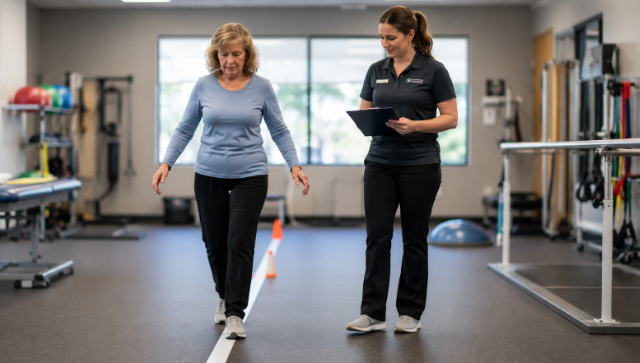
Balance issues can make everyday activities feel uncertain, and in some cases, unsafe. In most cases, people with balance–related disorders experience dizziness, spinning sensations, or general unsteadiness while walking or standing. These symptoms are permanent for some and come and go for others, but whenever they are present, it tends to make getting through the day that much harder, while also increasing the risk of falls.
Your balance depends on coordination between several systems in the body, including the inner ear, vision, muscles and joints, and the brain. And when one or more of these systems is disrupted, the result may be dizziness and instability.
The encouraging news is that balance disorders typically respond quite well to a specific type of physical therapy called vestibular rehabilitation. Vestibular rehab is administered by specialized physical therapists, who use targeted exercises and other interventions to reduce dizziness, improve stability, and restore confidence in movement. For most patients with a balance issue, vestibular rehab is one of the most effective treatments available so long as serious medical conditions have been ruled out.
How the Balance System Works
Maintaining balance requires the brain to combine information from three primary sources:
- The inner ear (vestibular system), which detects head movement and position relative to gravity
- Vision, which helps to orient the body in space
- Muscles and joints, which provide feedback about body position and movement
When one or more of these systems are not working properly, the brain receives conflicting information, which can lead to dizziness, vertigo, or feeling “off balance.” Vestibular rehab focuses on improving coordination between these systems and helping the brain adapt, which makes balance become more automatic and reliable over time.
Common Balance Disorders Treated With Physical Therapy
Below are 5 common balance disorders and how vestibular rehab administered by physical therapist can help:
Benign Paroxysmal Positional Vertigo (BPPV)
BPPV is a very common cause of vertigo and one of the most responsive balance conditions to treatment. It occurs when tiny calcium crystals in the inner ear become displaced and interfere with normal motion signals. Common symptoms include:
- Brief spinning sensations
- Vertigo triggered by rolling in bed
- Dizziness when looking up or bending over
- Possible nausea
Physical therapists often treat BPPV using a set of maneuvers for the head and body that are designed to guide the displaced crystals back to their proper location. These treatments are noninvasive and typically very effective. Many patients improve significantly after one or two visits, and additional exercises can be prescribed if symptoms persist.
Vestibular Neuritis
Vestibular neuritis is caused by inflammation of the vestibular nerve, which transmits information about balance and head position from the inner ear to the brain. Vestibular neuritis usually results from an infection and begins with sudden and severe vertigo that may last several days. After the initial phase improves, lingering imbalance and motion sensitivity are common. Typical symptoms include:
- A sudden onset of vertigo
- Nausea during the early phase
- Difficulty walking
- Persistent imbalance
- Sensitivity to movement
Vestibular rehab plays an important role in recovery after the acute symptoms improve. Treatment helps the brain compensate for changes in vestibular function and restore normal movement patterns. Typical interventions include gaze stabilization exercises to improve vision during head movement, controlled head and body movements, balance training, and walking exercises to improve coordination.
Persistent Postural–Perceptual Dizziness (PPPD)
PPPD is a condition that involves an ongoing sensation of imbalance or motion that lasts for three months or longer. It often develops as a result of another vestibular condition such as BPPV or vestibular neuritis. Common symptoms include:
- Persistent unsteadiness
- Rocking or swaying sensations
- Sensitivity to visual motion
- Symptoms that worsen in busy environments
- Discomfort with prolonged standing or walking
Vestibular rehab is often used to retrain the brain's response to movement. Treatment often includes exercises to reduce motion sensitivity, visual–vestibular exercises to improve tolerance to complex environments, balance training for stability, and gradual exposure to challenging activities. Improvement tends to occur gradually, and being consistent with one's therapy program often leads to meaningful improvements.
Concussion–Related Balance Problems
Issues with balance and dizziness are common after concussions. While many people recover quickly from a concussion, some experience lingering symptoms that can interfere with daily activities. Common symptoms of post–concussion balance problems include:
- Dizziness with head movement
- Motion sensitivity
- Unsteadiness while walking
- Difficulty focusing during movement
- Neck–related dizziness
Physical therapists trained in concussion rehabilitation evaluate multiple possible sources of dizziness and design treatment programs accordingly. Treatment may include vestibular exercises to improve motion tolerance, eye–movement training to improve visual control, balance retraining, neck mobility and strengthening exercises, and a gradual return–to–activity program.
Targeted rehabilitation can help patients return to work, school, and recreational activities more safely and efficiently.
Age–Related Balance Problems
Balance often declines gradually due to changes in strength, sensation, reaction time, and vestibular function. Even without a specific diagnosis, these changes can increase fall risk and reduce confidence with walking and movement.
Most physical therapists can treat age–related balance problems by focusing on improving the physical abilities that support safe movement. Treatment often includes strengthening exercises for the hips and legs, static and dynamic balance training, walking practice, stepping exercises, and fall–prevention strategies. Research consistently shows that structured balance programs can improve stability and reduce fall risk.
Red Flags: When Dizziness May Require Medical Attention
Although many balance disorders can be treated effectively with vestibular rehab, some symptoms suggest that a more serious complication requiring urgent medical evaluation may be present. Seek immediate care if dizziness occurs with any of the following:
- Sudden weakness or numbness on one side
- Difficulty speaking
- Double vision or vision loss
- Severe or unusual headache
- Fainting or loss of consciousness
- Chest pain
- Sudden inability to walk
In the absence of any of these symptoms or after a potentially serious medical condition is ruled out, physical therapy is frequently recommended as an effective next step.
Take the Next Step Toward Better Balance
Balance disorders are common, but they are often very treatable as well. Conditions such as BPPV, vestibular neuritis, and concussion–related dizziness all respond extremely well to a comprehensive vestibular rehab program.
So if you are experiencing dizziness or unsteadiness, the first step of vestibular rehab is a comprehensive evaluation that will be performed to identify the specific cause of your balance issues and inform subsequent treatment decisions. A licensed physical therapist will then develop a personalized program with the overall goals of reducing your dizziness, improving your stability, and helping you move with greater confidence and safety. Call us today to learn more or schedule your first appointment!
References and Further Reading
September 1, 2026
Disclaimer:
The information in the articles, posts, and newsfeed is intended for informational and educational purposes only and in no way should be taken to be the provision or practice of physical therapy, medical, or professional healthcare advice or services. The information should not be considered complete or exhaustive and should not be used for diagnostic or treatment purposes without first consulting with your physical therapist, occupational therapist, physician or other healthcare provider. The owners of this website accept no responsibility for the misuse of information contained within this website.